
What is Candle Testing?
Candle testing evaluates whether candles and home fragrance products comply with European regulations and safety standards. This includes fire safety, chemical compliance, and correct product information.
Different product types require different testing approaches. Scented candles, diffusers, and wax-based products all have specific risks and requirements depending on their composition and use. Labelling must also comply with EU rules, including hazard communication where applicable.
Chemical Safety and Regulatory Compliance
REACH and CLP Compliance
Candles and fragrance products contain waxes, fragrances, dyes, and solvents that must comply with EU regulations. Testing checks restricted substances under REACH, CLP labelling requirements, allergen declarations, and the safety of ingredients. This ensures products are safe and compliant for the EU market.
Fire Safety and Product Performance
Burn Testing and Flame Behaviour
Fire safety is essential in candle testing. Products must burn in a controlled and safe way. Testing evaluates flame stability, burning consistency, overheating risks, and smoke or soot formation. Good performance reduces safety risks and complaints.
Usage and Environmental Resistance
Stability and Performance of Fragrance Products
Reed diffusers and wax melts must perform consistently during use. Testing reviews evaporation, scent diffusion, oil stability, leakage, and performance under different temperatures. This helps ensure a reliable product experience.
Verification of Ingredients and Labelling
Fragrance and Ingredient Testing
Testing confirms that the actual formulation matches declared ingredients on the MSDS. This includes fragrances, allergens, and base materials, as well as correct labelling and hazard symbols. Accurate labelling is required for selling products in the EU.
Risks
Risks of Not Testing Candles and Fragrance Products
Skipping candle testing increases the likelihood of safety issues and non-compliance.
Delays or Rejections at EU Borders
Products may be held or rejected due to missing documentation or non-compliant chemical content.
Incorrect Labelling or Missing Hazard Information
Failure to meet CLP requirements can prevent products from being sold in the EU.
Safety Incidents and Customer Complaints
Issues such as unstable flames, excessive smoke, or leaking diffusers can lead to complaints, returns, and reputational damage.
Candle Testing in China, India, and Other Asian Markets
Many candles and home fragrance products are manufactured in Asia. Testing is typically arranged before export to identify issues early in the production process.
Conducting tests close to the production location makes it easier to collect samples and address issues without delaying shipment. It also allows better coordination between production and compliance requirements.
Testing during production helps ensure that final goods match approved samples and comply with EU standards upon arrival.

Candle Compliance and Importer Responsibility
Testing is only part of the compliance process.
Importers are responsible for ensuring that products meet all applicable EU regulations before entering the market.
Chemical Compliance and Labelling Control
Importers must verify that all ingredients comply with REACH and that labelling meets CLP requirements.
This includes:
- Hazard pictograms and warnings
- Allergen declarations
- Language requirements for EU markets
- Product identification and traceability
Even small labelling errors can result in non-compliance.
Consistency Across Production
Variations between samples and bulk production can affect both safety and product quality. Changes in fragrance composition, raw materials, or production processes may lead to unexpected results.
Testing during production helps detect inconsistencies early and avoids costly corrections later.
Request a Candle Testing Quotation
Testing requirements depend on the type of product, ingredients used, and intended market. A tailored quotation provides a clear overview of the required tests and process.
You will receive:
- Recommended tests based on your product
- Transparent cost estimates
- Expected turnaround times
Request a quotation to ensure your candles and fragrance products meet EU requirements and enter the market without delays.
Which testing is required?
Understand the three main EN standards used to assess candle safety and compliance.
EN 15493 - Fire Safety Testing
EN 15493 assesses whether indoor candles burn safely during normal use. The test checks flame height, stability, secondary ignition, container overheating and unsafe burning behaviour. This helps verify that candles meet European fire safety expectations before import or sale.

EN 15494 - Safety Labelling
EN 15494 focuses on candle safety warnings and user instructions. It helps define the pictograms, warning statements and safe-use information required on candle labels. Correct labelling reduces consumer risk and supports EU market compliance.
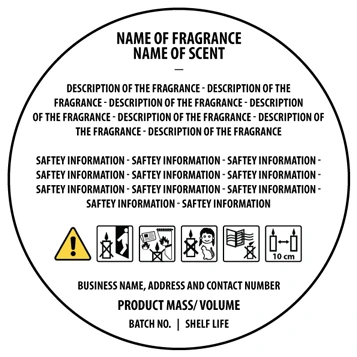
EN 15426 - Soot Emission Testing
EN 15426 measures the soot emissions produced when a candle burns. Excessive soot can affect product quality, indoor cleanliness and customer satisfaction. Testing helps confirm that the candle burns cleanly and performs consistently during normal use.

Frequently Asked Questions
Here are some common questions about this service.
Yes. Scented candles can contain fragrances, dyes, waxes and other chemical substances that must be assessed under EU chemical rules. REACH checks whether substances are restricted or require specific controls, while CLP determines whether hazard classification, pictograms, warnings or allergen information are required on the label. REACH and CLP are key EU chemical safety frameworks.
EN 15494 covers safety labelling for indoor candles. It helps define the safety warnings and pictograms that should appear on candle labels, such as instructions for safe burning and warnings about leaving candles unattended. Proper labelling helps reduce consumer safety risks and supports compliance with EU product safety expectations.
EN 15426 is used to evaluate soot emission from candles. Soot testing helps determine whether a candle produces excessive smoke or deposits during normal use. This is important for product quality, consumer safety and reducing complaints after the product is launched.
Yes. Reed diffusers should be assessed for chemical safety, CLP classification, labelling, leakage, evaporation, fragrance stability and packaging safety. Because diffusers often contain fragrance oils and solvents, incorrect classification or missing hazard information can prevent the product from being sold legally in the EU. Guidance for candle and reed diffuser producers under REACH and CLP has also been published by EU safety authorities.
Wax melts may require testing and documentation because they can contain fragrance oils, dyes and other chemical ingredients. Testing can check REACH restrictions, CLP labelling requirements, fragrance allergens, melting behaviour, packaging and safe use instructions. Wax melts should not be treated as risk-free simply because they do not have a wick.
Yes. Candles, reed diffusers or wax melts with missing documentation, unsafe chemical content or incorrect labelling may be delayed, rejected, withdrawn from sale or flagged by market surveillance authorities. Testing before shipment helps identify these issues before products enter the EU market.
Yes. Testing before shipment is often the safest approach for importers. If candles, diffusers or wax melts are tested close to the production location, failed samples can be corrected before bulk goods are shipped. This reduces the risk of customs delays, relabelling costs, returns and product withdrawals in Europe.
Importers may need test reports, Safety Data Sheets, ingredient information, CLP classification, compliant product labels, traceability details, supplier documentation and a technical file or compliance file. The exact documentation depends on the candle type, fragrance composition, packaging and target EU country.
No. Candles are generally assessed through several overlapping EU frameworks, including general product safety, REACH, CLP, labelling requirements and applicable candle safety standards. This means importers should check both chemical compliance and physical product safety before selling candles in Europe.
The turnaround time depends on the product type, number of samples, required test scope and laboratory availability. A simple labelling or documentation review may be faster than full burn, soot, stability, chemical and leakage testing. Westwood Sourcing can recommend the required test plan based on your product and target market.
Looking for a price?
Send us your product details and we'll quote candle testing in Asia
News
Our latest content
Check out our latest blog posts.
Reviews
Customer testimonials
What our customers are saying about us.
"Trying to wrap my head around GPSR and Joe made it super easy to do and understand."
Leanne
Botanical arts seller
United Kingdom
"Joe has been unbelievably helpful to keeping me up to date with ALL GPSR related compliance and questions, essential for business."
Jesse
Vinyl records seller
United States
"Very helpful in my hour of Amazon frustrations!!"
Martin
Amazon seller
"Joe and Youri are amazing. They walked me through the complex world of GPSR and CE compliance and made the process easy. Couldn't have done it without them. Highly, highly recommended."
Eugene
Wheelchair glove seller
Lithuania
"I would recommend his services to anyone looking to start selling in the EU again with the GPSR regulations in place."
Amanreet
Board game seller
"Joe is very accommodating & works with you to find solutions."
Hasan
Plastics manufacturer
Canada
Our references
We have worked together with a wide arrange of customers from all over the world.

















Let's Connect
Have a question or need assistance? Share your details below and we’ll get back to you with the support you need.
Company details
We'd love to hear from you! If you have any questions, feedback, or need assistance, please feel free to reach out to us using the contact details provided. Our team is here to help and will respond as soon as possible. Thank you for getting in touch!

Phone
Office
Fellenoordstraat 52 Unit 2.38, 4811TJ Breda, Netherlands
VAT
NL865927534B01
Chamber of Commerce
NL 92195873