
Imagine: you are about to launch a product on the European market. You know that this can open up opportunities, but also that the European Union has strict rules to protect consumers. This is where the CE marking comes into play. This mark is not just a label; it is a passport for your products to travel freely throughout the EU. In this article we dive deep into the world of CE marking. We explain what it is, why it is so important and what you as an importer need to know to get started.
- CE marking is essential for access to the EU mark
- Importers must verify that the products meet CE requirements and provide the correct documentation.
- Not every product requires a CE marking.
- The CE certification process involves identifying applicable guidelines, conducting tests and drawing up an EU declaration of conformity.
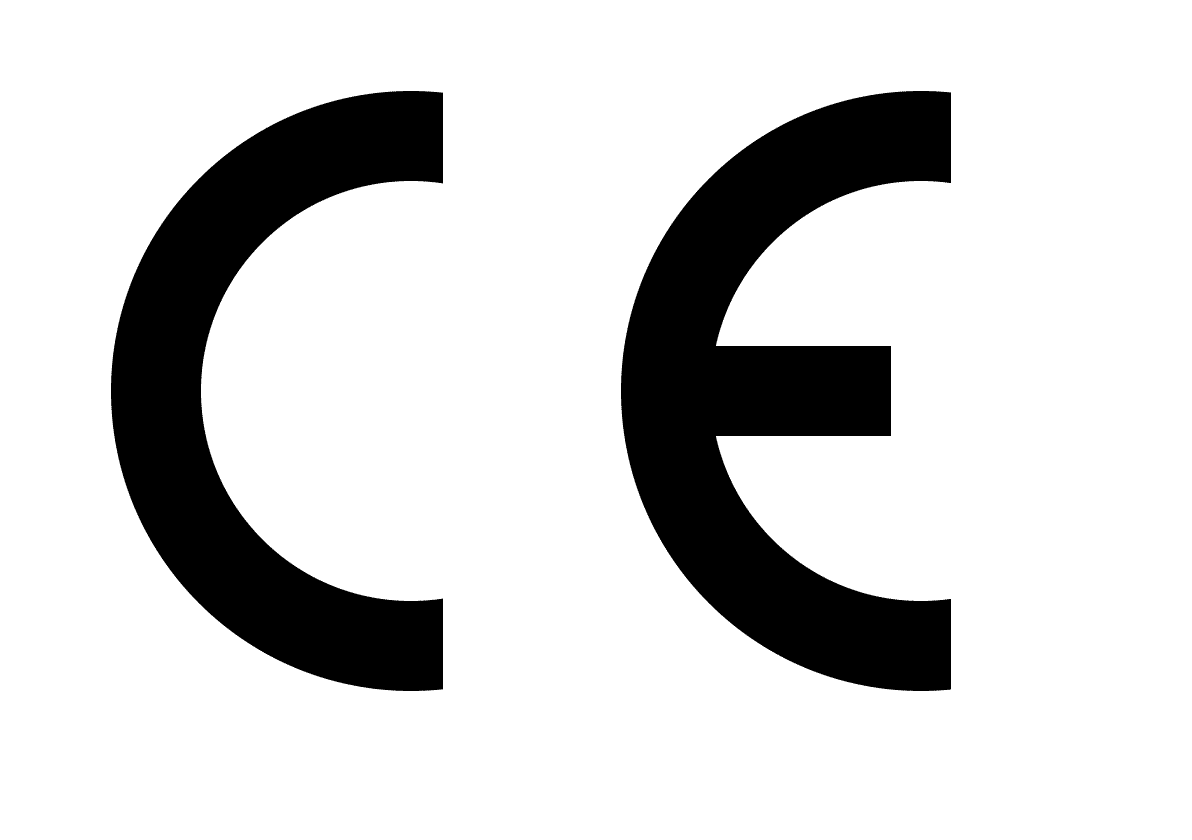
What is CE-marking?
The CE marking, short for Conformité Européenne, is your key to the European market. It is a sign that your product complies with all EU regulations that apply to the product. This ranges from toys to medical devices; if it bears the CE mark, it means that it is safe for European citizens. But it is more than a safety sign. It also symbolizes that your product has passed quality checks and meets European standards for health, safety and environmental protection. In short, it is your promise to the consumer that what you sell is reliable.
The responsibilities of importers under CE marking
As an importer you bear a great responsibility. You must ensure that the products you bring into the EU meet the strict requirements of the CE marking. This means that you must verify that the manufacturer outside the EU has followed the necessary tests and procedures. In addition, you are the one who ensures that all documentation, such as the EU declaration of conformity, is complete and correct. It's serious business; Failure to comply with these obligations can lead to fines and even a ban on your product in the EU.
EU Safety Gate
Take a look at the website "EU Safety Gate" of the European Commission to see which products need to be recalled (daily) because they do not comply with the applicable legislation.
Which products does CE marking apply to?
Not every product requires a CE mark to be sold in the EU, but a significant number do. This varies from electrical equipment to construction products and toys. The marking indicates that these products comply with EU directives for safety, health and the environment. But there are exceptions. Knowledge of which products fall under these regulations is crucial for every importer, because placing a CE marking on a product on which it is not allowed is also not permitted!
 Electrical equipment and electronics
This includes home appliances, computers, and lighting. These products must be shown to comply with European safety standards, have electromagnetic compatibility and do not contain harmful substances (RoHS directive).
What to do: Manufacturers must conduct electromagnetic compatibility testing and safety testing. In addition, they must compile a technical file containing proof of conformity and draw up an EU declaration of conformity. A Notified Body carries out an independent assessment of the product to ensure that it meets the necessary regulations and standards for safety and performance. The notified body assesses the product's technical file, the manufacturer's quality systems, and carries out inspections if necessary.
 Toys
Toys
Toys must be safe for children and meet European safety standards. This means it must be free of toxins, avoid choking hazards and instructions and warnings must be clear.
What to do: Perform tests to check for chemical, physical and mechanical safety. Manufacturers must also provide clear directions for use and safety warnings on the packaging.
 Medical devices
From simple plasters to advanced medical equipment, medical devices must prove that they are safe and effective to use.
What to do: Depending on the class of the medical device (I, IIa, IIb or III), the requirements range from self-certification (for some Class I devices) to an assessment by a notified body. This includes clinical evaluation, risk management and preparing a technical file.
 Construction products
Construction products, such as windows, doors and insulation materials, must show that they meet performance requirements for strength, durability and fire safety.
What to do: Manufacturers must carry out performance tests according to the harmonised European standards and draw up a Declaration of Performance that states the technical performance of the product. For certain construction products, depending on the level of risk, a notified body may need to be involved. This applies especially to products that affect the structural integrity of a building, such as fire safety products. The notified body carries out tests, assesses the performance of the product and verifies the manufacturer's factory production control.
 Personal protective equipment (PPE)
This includes products such as helmets, safety glasses and work gloves. PPE must protect the wearer against risks to health and safety at work.
What to do: Carry out tests to confirm that the PPE meets EU safety standards. This covers the materials used, the design and the production processes. An EU Declaration of Conformity is also required. For PPE in category II and III, such as full body protection or protection against serious risks, certification by a notified body is required. This body assesses the design documentation and can carry out random production checks to ensure the products are consistent and safe.
 Machines
Machines, from power tools to industrial production lines and large household appliances, must be safe for the user and bystanders.
What to do: Conduct risk assessments to identify and address all potential hazards. Designing machines with the necessary safety features and instructions. It is also necessary to keep a technical file that demonstrates the conformity of the product.
Although many machines can be self-certified, there are situations, particularly for higher risk machines, where the intervention of a Notified Body is required. This is especially true when the machine is subject to special procedures, as described in the Machinery Directive. The notified body can assist in carrying out the conformity assessment procedures, including assessing the technical design files and carrying out the necessary inspections and tests.
The process of CE certification
Obtaining a CE mark is a process that requires accuracy and attention to detail. It starts with determining which specific guidelines apply to your product. You must then demonstrate that your product meets these requirements, which often involves testing by an independent body. Once this is accomplished, you will need to prepare an EU Declaration of Conformity certifying that your product complies with all relevant EU legislation. This document must be kept with the product and be shown to the authorities upon request.
CE marking vs. China Exports
Although our focus is CE marking, it is worth noting that there may be confusion with the China Export mark. A subtle reference to this is important, as we discussed the differences between the two in an earlier article. However, for this article we will keep the focus on the European marking that indicates that products meet EU standards, and we will leave the discussion about China Export for what it is.
Read more:
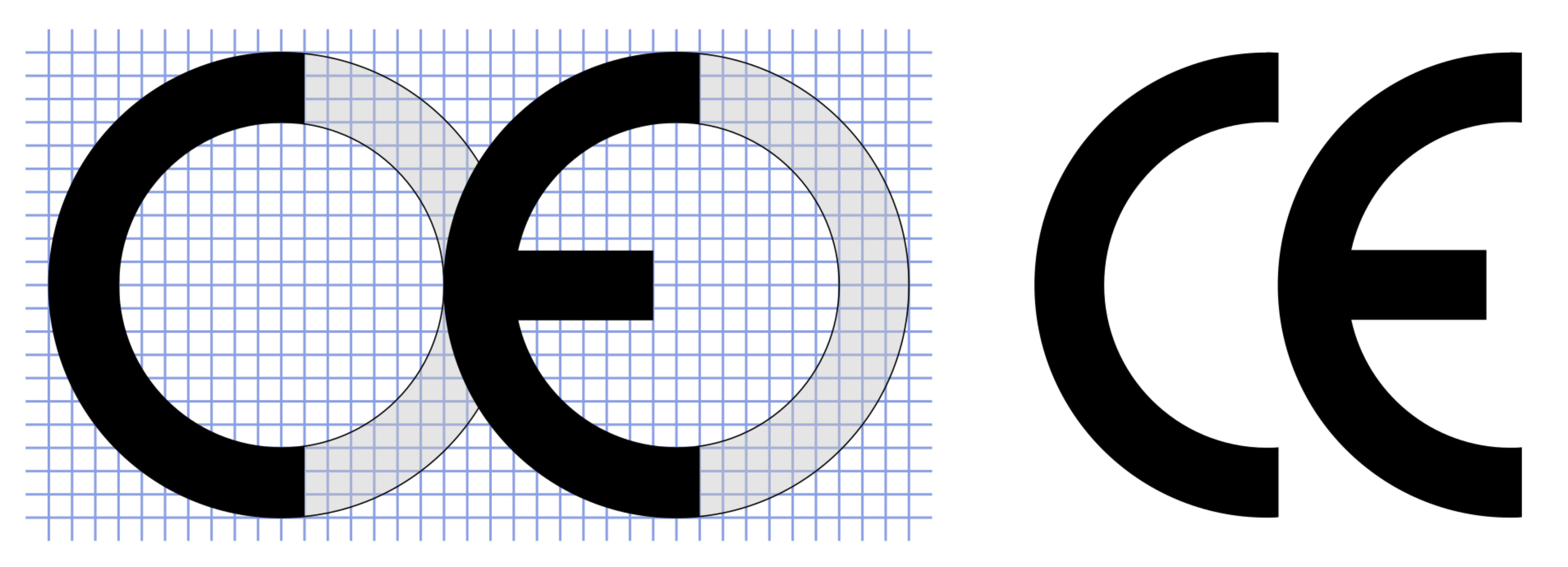
CE Mark vs China Export: This is the difference
In this article we explain the differences between CE marking and China Export.
Read moreFrequently asked questions about CE marking
There are many questions surrounding CE marking. How much does it cost to have a product certified? How long does the process take? And what happens if my product does not meet the requirements? These are all legitimate questions that are important for every importer. Cost and time may vary depending on the product and complexity of the tests. Failure to comply with CE marking requirements could result in the withdrawal of your product from the EU market, so it is crucial to take this process seriously.
Conclusion
CE marking is more than a sign on a product. It is an indication of quality and safety that opens the door to the European market. It is essential for importers to understand and comply with the responsibilities associated with this marking. By studying the regulations and working carefully, you ensure that your products can be traded within the EU without any problems.
Do you want to apply for a CE marking?
Please contact Westwood Sourcing. We offer expert support and advice on CE marking and are happy to help you.