Skip to Content
Electronics Compliance: Templates and Symbols

Electronics Compliance: Templates and Symbols

Electrical and electronic products sold in the EU must meet rules such as the Low Voltage Directive, the EMC Directive, the Radio Equipment Directive for wireless products, RoHS and WEEE. Here you can download free templates and symbols to prepare your technical file, draw up your EU declaration of conformity and label your product correctly. 

Looking for the CE mark itself? Download it from our CE and UKCA marks page.

Responsible Joe Aniba
Last Update 07/11/2026
Members 4
Symbols Templates Compliance
Technical File Template
View all
Electronics Technical File Template Download: Word and PDF
Preview

Use this free template to prepare the technical file for your electrical or electronic product. It guides you step by step through the information the EU requires, with plain questions and a worked example for each section, and ends with a ready-to-fill EU declaration of conformity.

What is a technical file for electronics?

A technical file is the set of documents that shows your product meets EU law. For electronics, it includes a product description, drawings and circuit diagrams, the standards applied, test reports and a risk assessment. You keep it for 10 years after the last product is placed on the market and show it to market surveillance authorities on request. You do not send it to anyone in advance. The template covers all of this, plus a check of which laws apply to your product and a list of open items, so you can see at a glance what is still missing.

Which products is this template for?

The template is for electrical and electronic products sold to consumers in the EU, such as chargers and power adapters, household appliances, LED lighting, battery-powered devices and wireless products with Bluetooth or Wi-Fi. It covers the Low Voltage Directive, the EMC Directive, the Radio Equipment Directive, RoHS, the Batteries Regulation and the General Product Safety Regulation. Toys and medical devices have their own requirements and are not covered.

Do I need a technical file if my supplier has test reports?

Yes. If you sell a product under your own brand, you are the manufacturer under EU law and you are responsible for the technical file. You can use your supplier’s test reports, but only if you can show that your product is the same as the tested model. The template includes a table to link your models to the supplier’s models, and a supplier declaration of product identity. Selling from outside the EU? Then you also need an economic operator in the EU. Check which products our EU Representative service covers.

Download

Technical File Template - Electronics.docxTechnical File Template - Electronics.pdf

More templates and symbols for electronics: Electronics Compliance: Templates and Symbols.

CE Declaration of Conformity for Electronics
View all
CE Declaration of Conformity Electronics Download: Word and PDF
Preview

Download a free CE Declaration of Conformity template for electrical and electronic products in Word and PDF format. Use it to prepare your own EU DoC, or have Westwood prepare the Declaration of Conformity for you.

What Is a CE Declaration of Conformity for Electronics?

The EU Declaration of Conformity is the manufacturer's formal declaration that a product complies with the applicable EU harmonisation legislation. It identifies the product, manufacturer, applicable legislation and relevant standards used to demonstrate conformity.

When Is a Declaration of Conformity Required?

Electrical and electronic products subject to CE-marking legislation require an EU Declaration of Conformity before being placed on the EU market. Depending on the product, this may include requirements under the Low Voltage Directive, EMC Directive, Radio Equipment Directive or RoHS Directive.

What Should the Declaration Include?

The declaration should include the product identification, manufacturer details, a statement of sole responsibility, applicable EU legislation and relevant harmonised standards or other technical specifications. It must be signed by a person authorised to act on behalf of the manufacturer.

Need Us to Prepare It for You?

If you prefer not to prepare the declaration yourself, Westwood can prepare a product-specific CE Declaration of Conformity based on your product information, applicable legislation, standards and supporting compliance documentation.

Download

Download the CE Declaration of Conformity template for electronics below in Word or PDF format.

CE-Declaration-of-Conformity-Electronics-Template.docxCE-Declaration-of-Conformity-Electronics-Template.pdf

This template is provided as a starting point and must be completed and adapted to your specific product, applicable EU legislation, standards and supporting conformity documentation.

Looking for another product category? Return to all CE Declaration of Conformity templates.

WEEE Symbol
View all
WEEE Symbol Download: Crossed-Out Bin SVG, PNG and PDF
Preview

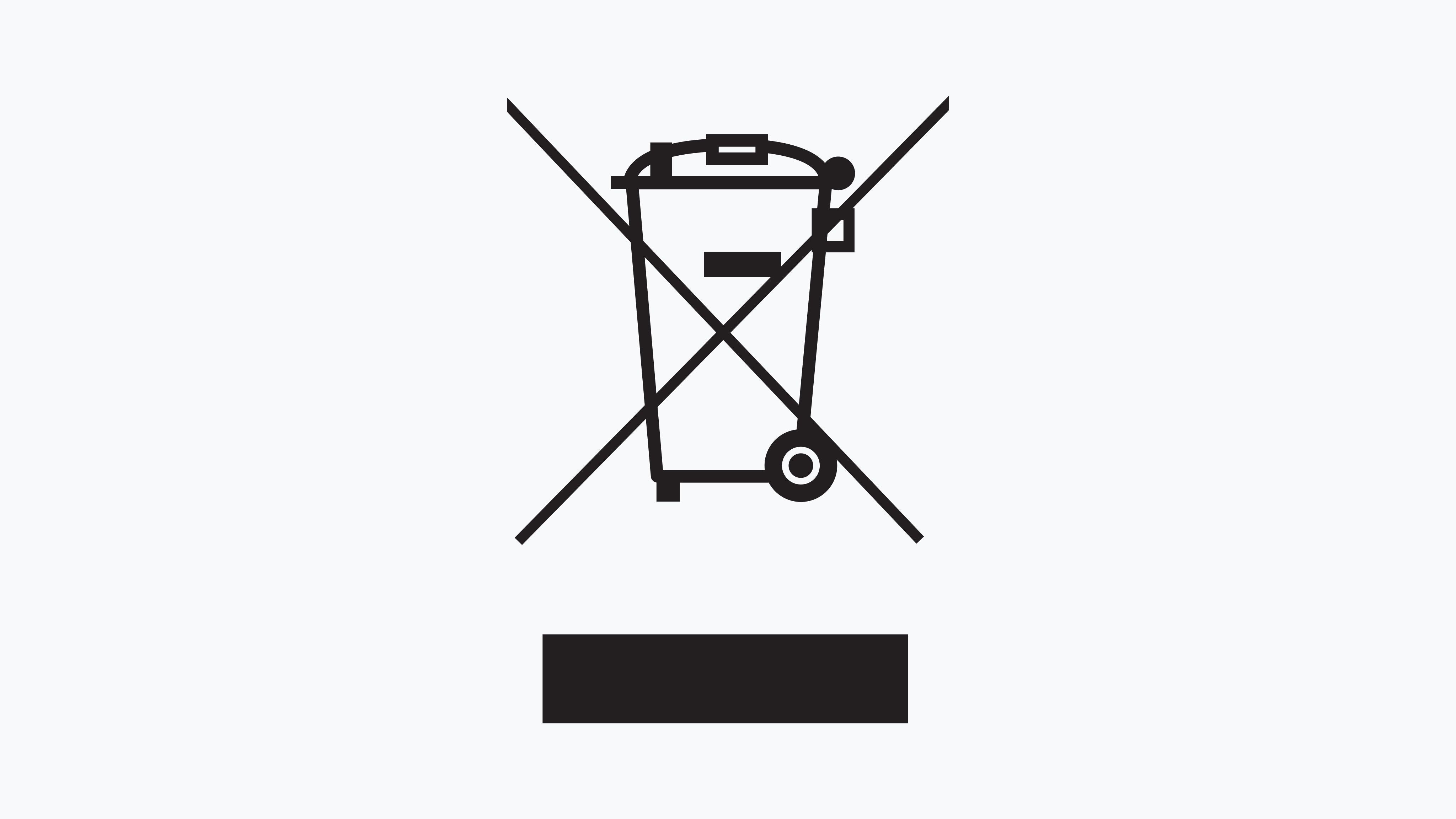
The WEEE crossed-out wheeled bin indicates that electrical and electronic equipment must be collected separately from unsorted municipal waste. Download the current version with the horizontal bar in SVG, PNG and PDF format.

When Is the WEEE Symbol Required?

Electrical and electronic equipment within the scope of the WEEE Directive must generally carry the crossed-out wheeled bin symbol when placed on the EU market. The marking must be visible, legible and indelible.

Where the size or function of the product makes marking the equipment itself impractical, the symbol may instead be placed on the packaging, instructions for use and warranty.

Why Does the WEEE Symbol Have a Bar?

The horizontal bar underneath the crossed-out bin identifies electrical and electronic equipment placed on the market after 13 August 2005.

For current products, the symbol with the horizontal bar is therefore the standard version we provide. We do not provide the crossed-out wheeled bin without the bar as a separate download.

Which Products Need the WEEE Symbol?

The requirement applies to electrical and electronic equipment within the scope of the WEEE Directive. This can include household appliances, consumer electronics, lighting equipment, electrical tools, electronic toys and many other products that depend on electric currents or electromagnetic fields to work.

Whether a particular product falls within scope should always be checked against the applicable WEEE requirements and exclusions.

You Might Also Need These Marks

Electrical and electronic products that require the WEEE symbol may also require a CE or UKCA mark, depending on the product and market. If you sell electronics in France, additional French EPR recycling markings, including Triman and Info-tri, may also apply.

Download

Download the WEEE crossed-out wheeled bin with horizontal bar below in SVG, PNG and PDF format.


WEEE-crossed-out-bin-symbol.png

WEEE-crossed-out-bin-symbol.svg

WEEE-crossed-out-bin-symbol.pdf

Use the version with the horizontal bar for current electrical and electronic equipment. Always verify that your product falls within the scope of the WEEE Directive and meets the applicable marking and EPR requirements.

Looking for more electrical markings? View all electronics symbols.


Electrical Safety Symbols
View all
Class II Double Insulated Symbol Download: SVG, PNG and PDF
Preview

The Class II double insulated symbol identifies electrical equipment designed with double or reinforced insulation and without reliance on protective earthing. Download the double square symbol in SVG, PNG and PDF format.

What Is Class II Electrical Equipment?

Class II equipment is designed so that protection against electric shock does not rely solely on basic insulation or a protective earth connection. Additional safety is provided through double or reinforced insulation.

This type of equipment is commonly referred to as double insulated equipment.

When Is the Double Insulated Symbol Used?

The square-within-a-square symbol identifies electrical equipment classified as Class II. It indicates that the equipment uses the required insulation measures for Class II construction and does not rely on a protective earth connection for protection against electric shock.

The symbol should only be used when the product has actually been designed and assessed as Class II equipment.

Does Class II Equipment Need an Earth Connection?

Class II equipment does not rely on protective earthing for protection against electric shock. It should therefore not be confused with Class I equipment, which typically uses a protective earth connection as part of its safety measures.

A functional earth connection may still exist in some equipment for purposes unrelated to protection against electric shock.

You Might Also Need These Symbols

For other electrical constructions, see the Protective Earth and Functional Earth symbols. Depending on the product and market, electrical equipment may also require a CE or UKCA mark and the WEEE crossed-out wheeled bin.

Download

Download the Class II double insulated symbol below in SVG, PNG and PDF format.

Class-2-appliance-symbol.pngClass-2-appliance-symbol.svgClass-2-appliance-symbol.pdf

Use this symbol only for equipment that meets the applicable requirements for Class II construction. Do not use it merely because a product does not have an earth connection.

Looking for another electrical marking? View all electronics symbols.


Class III Symbol Download: SVG, PNG and PDF
Preview

The Class III symbol identifies electrical equipment designed for protection against electric shock by operation at safety extra-low voltage. Download the symbol in SVG, PNG and PDF and learn when it is used.

What Is Class III Electrical Equipment?

Class III equipment is designed to operate at safety extra-low voltage (SELV). Protection against electric shock relies on the equipment being supplied at this low voltage, and voltages higher than SELV are not generated within the equipment.

Unlike Class I equipment, Class III equipment does not rely on protective earthing.

When Is the Class III Symbol Used?

The Roman numeral III inside a diamond identifies equipment classified as Class III. It should only be used when the electrical design of the product meets the applicable requirements for Class III construction.

Simply operating at a relatively low voltage does not automatically make a product Class III.

Class I, Class II and Class III

Class I equipment uses protective earthing as part of its protection against electric shock. Class II equipment relies on double or reinforced insulation, while Class III equipment relies on operation at safety extra-low voltage.

These classifications describe different methods of protection and should not be used interchangeably.

You Might Also Need These Symbols

Depending on your product, see also the Protective Earth and Class II Double Insulated symbols. Electrical products may also require the CE or UKCA mark and, in the EU, the WEEE crossed-out wheeled bin.

Download

Download the Class III symbol below in SVG, PNG and PDF format.

class-III-appliance-symbol.pngclass-III-appliance-symbol.svgclass-III-appliance-symbol.pdf

Use this symbol only for equipment that meets the applicable requirements for Class III construction. Do not use it simply because a product operates at low voltage.

Looking for another electrical marking? View all electronics symbols.


Indoor Use Only Symbol Download: SVG, PNG and PDF
Preview

The indoor use only symbol indicates that electrical equipment is intended exclusively for use indoors. Download the house symbol in SVG, PNG and PDF and learn when it should be used.

What Does the Indoor Use Only Symbol Mean?

The house symbol indicates that equipment is designed for indoor use and should not be exposed to outdoor environmental conditions such as rain or excessive moisture.

It is commonly found on power supplies, adapters, lighting equipment and other electrical products intended only for indoor environments.

When Is the Indoor Use Only Symbol Used?

The symbol can be used when the safe use of electrical equipment is restricted to indoor locations. Whether the marking is required depends on the product, its design and the applicable product-specific safety requirements and standards.

The symbol should not be used as a substitute for assessing the environmental conditions and ingress protection required for the product.

Does Indoor Use Only Mean the Product Is Not Waterproof?

An indoor-use restriction generally means the equipment has not been designed for unrestricted outdoor exposure. However, the house symbol itself does not specify an IP rating or a particular level of protection against water and dust.

Check the product's IP rating and applicable safety requirements separately where protection against water or solid objects is relevant.

You Might Also Need These Symbols

Depending on your electrical product, you may also need the Class II Double Insulated, Class III, AC or DC and WEEE symbols. Products covered by EU or UK conformity legislation may also require a CE or UKCA mark.

Download

Download the indoor use only symbol below in SVG, PNG and PDF format.

indoor-use-only-symbol.pngindoor-use-only-symbol.svgindoor-use-only-symbol.pdf

Use the symbol only where an indoor-use restriction is appropriate for the equipment. Always check the applicable product standard and environmental requirements before applying the marking.

Looking for another electrical marking? View all electronics symbols.


You might also need these icons

Selling electrical or electronic products in France? You may need additional French EPR symbols, including Triman and Info-tri markings. You may also need the CE or UKCA mark, depending on the product and market where it is sold.