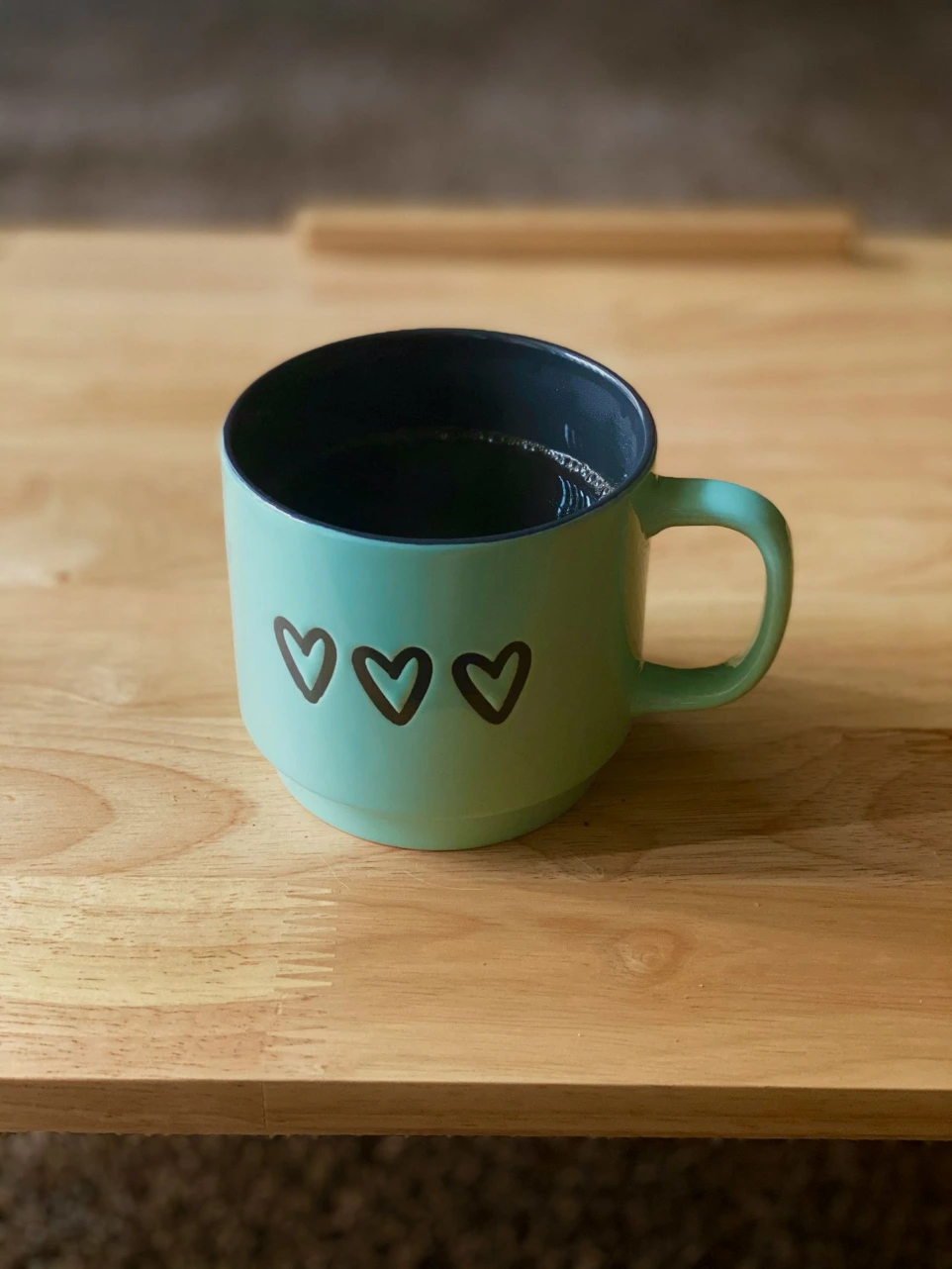
A ceramic mug looks like one of the simplest products you can import. It has no battery, no plug and no moving parts. Yet ceramic tableware has its own EU rules on top of the general rules for food contact materials, and they come with a document many sellers have never heard of: the declaration of compliance. Without it, a retailer or a market surveillance authority can stop the product, even when the mug itself is perfectly safe.
The second risk is in the glaze. Glazes and decorations can contain lead and cadmium, and acidic food or drinks can draw these metals out. The EU limits for this date from 1984. In 2026 the three Benelux countries cut them sharply, for lead to less than a hundredth of the EU level. If you sell ceramics across the EU, those new limits are the ones to design for.
- Which rules apply to ceramic tableware
- The declaration of compliance
- The EU limits for lead and cadmium
- The stricter Benelux limits since 29 May 2026
- Why the Benelux limits are the safe benchmark
- Labelling: when you need the glass and fork symbol
- What the GPSR adds for ceramic tableware
- Checklist for selling ceramic tableware in the EU
Which rules apply to ceramic tableware
Every material that touches food falls under Regulation (EC) No 1935/2004. Its core rule is in Article 3: the material must not release its constituents into food in quantities that could endanger human health or change the food in an unacceptable way. The manufacturer must also work according to good manufacturing practice (Regulation (EC) No 2023/2006).
For ceramics there is a specific measure on top: Council Directive 84/500/EEC, amended by Commission Directive 2005/31/EC. It covers ceramic articles that are meant to come into contact with food in their finished state, such as mugs, plates, bowls, teapots, oven dishes and storage jars. It sets limits for two metals only, lead and cadmium, and it requires a declaration of compliance. Glass, crystal and enamelled metal fall outside this directive, and there are no harmonised EU limits for them yet.
The European Commission is preparing a revision that would lower the lead and cadmium limits considerably, add limits for other metals and extend the rules to glass and enamel. As of November 2026 it has not been adopted.
The declaration of compliance
Article 2a of Directive 84/500/EEC requires a written declaration for ceramic articles that are not yet in contact with food. It must accompany the products at every marketing stage up to and including the retail stage. In practice that means from the factory to the importer, from the importer to the wholesaler or your fulfilment warehouse, and from there to the shop. The consumer does not need to receive it.
The declaration is issued by the manufacturer or by a seller established in the EU. Annex III lists what it must contain:
- the name and address of the company that made the finished ceramic article, and of the importer into the EU;
- the identity of the ceramic article;
- the date of the declaration;
- confirmation that the article meets Directive 84/500/EEC and Regulation (EC) No 1935/2004.
The declaration must make it easy to identify the goods it covers. You renew it when a substantial change in production changes the release of lead or cadmium, for example a new glaze, a new decoration or a new glaze supplier.
The declaration needs evidence behind it. On request, the manufacturer or the importer must give the authorities documentation showing that the articles meet the limits: the test results, the test conditions, and the name and address of the laboratory that carried out the test (Article 2a(2)). A declaration without that documentation, usually a test report, will not hold up in an inspection.
Need a declaration? Download our free ceramic declaration of compliance template in Word or PDF and fill it in for each product.
The EU limits for lead and cadmium
Ceramics are tested with 4% acetic acid for 24 hours at 22 °C, in the dark when cadmium is measured (Annex I of Directive 84/500/EEC). The acetic acid stands in for acidic food such as fruit juice, tomato sauce or vinegar. Our article on product testing for the EU explains how to choose a test and a lab. Which limit applies depends on the shape of the article:
| Category | Examples | Lead | Cadmium |
|---|---|---|---|
| 1. Articles that cannot be filled, or with an internal depth of 25 mm or less | Flat plates, saucers | 0.8 mg/dm² | 0.07 mg/dm² |
| 2. All other articles that can be filled | Mugs, cups, bowls, jugs | 4.0 mg/l | 0.3 mg/l |
| 3. Cooking ware, and packaging or storage vessels over 3 litres | Oven dishes, casseroles, large storage jars | 1.5 mg/l | 0.1 mg/l |
Two details matter in practice. If an article has a ceramic lid, the limit applies to the vessel alone. And an article that exceeds a limit by no more than 50% still passes if at least three more articles of the same shape, size, decoration and glaze are tested, their average stays within the limit and none of them exceeds it by more than 50% (Article 2 of the directive).
The stricter Benelux limits since 29 May 2026
In November 2024 the Benelux Committee of Ministers concluded that the EU limits no longer protect consumers well enough (Decision M (2024) 5). The Dutch explanatory note gives two reasons: there is no safe threshold for lead, and the European Food Safety Authority (EFSA) has lowered its health-based guidance value for cadmium. The three countries used the safeguard clause in Article 18 of Regulation (EC) No 1935/2004 to set their own limits. The Netherlands and Luxembourg apply them from 29 May 2026. Belgium implemented them by Royal Decree of 19 July 2026, also with effect from 29 May 2026.
| Category | Lead, EU | Lead, Benelux | Cadmium, EU | Cadmium, Benelux |
|---|---|---|---|---|
| 1. Flat (max. 25 mm deep) | 0.8 mg/dm² (800 µg/dm²) | 6 µg/dm² | 0.07 mg/dm² (70 µg/dm²) | 4 µg/dm² |
| 2. Other fillable articles | 4.0 mg/l (4,000 µg/l) | 30 µg/l | 0.3 mg/l (300 µg/l) | 20 µg/l |
| 3. Cooking ware, vessels over 3 litres | 1.5 mg/l (1,500 µg/l) | 10 µg/l | 0.1 mg/l (100 µg/l) | 7 µg/l |
For lead the Benelux limit is more than a hundred times lower than the EU limit, for cadmium about fifteen times lower. A glaze that passes comfortably in the rest of the EU can therefore fail in the Netherlands.
The Dutch regulation also tightens the paperwork. The documentation behind the declaration must show compliance with the new limits. It may rest on test results, or on a calculation or estimate, for example when the glaze contains no lead or cadmium at all. If that does not give enough certainty, the standard test applies. Ceramics that met the old Dutch rules and were first placed on the Dutch market before 1 December 2026 may be sold until the stock runs out. Belgium and Luxembourg have their own texts, so check their transitional rules separately.
Why the Benelux limits are the safe benchmark
Legally, the stricter limits only apply to products placed on the market in the Netherlands, Belgium and Luxembourg. But a seller who supplies the whole EU rarely controls where a mug ends up. A marketplace order, a distributor in Germany who sells on to a Dutch shop or a pan-European fulfilment network can each bring your product into the Benelux. Keeping two glaze specifications and two sets of paperwork for one product costs money and is easy to get wrong.
We therefore advise you to write the Benelux limits into your order with the factory, test against them, and state them in the declaration of compliance. One product, one test report and one declaration then work in every EU country.
Then check the detection limit on the test report, because a report can pass and still prove nothing about the Benelux. Directive 2005/31/EC only requires the lab method to detect 0.1 mg/l of lead (Annex II, point 4.1). That is 100 µg/l, more than three times the Benelux limit for mugs and bowls.
A report that says "not detected" with that detection limit proves EU compliance, but it says nothing about the Benelux limit. Ask the lab for a method with a limit of quantification well below 30 µg/l for lead and 20 µg/l for cadmium, such as ICP-MS (a mass spectrometry method), and check that figure on the report.
Already have a test report from your factory? With our test report review we check whether it matches the EU rules before you rely on it.
Labelling: when you need the glass and fork symbol
Article 15 of Regulation (EC) No 1935/2004 requires food contact articles that are sold without food to carry one of three things: the words "for food contact", a specific indication of use (such as "soup spoon"), or the glass and fork symbol from Annex II. That requirement does not apply to articles that are clearly meant for food, such as a mug or a dinner plate (Article 15(2)). For a decorative bowl or a jar the use is less obvious, and the symbol removes the doubt.
The exemption only covers that first point. The other requirements of Article 15 still apply: instructions for safe use where needed (for example "not for the microwave" when the decoration contains metal), the name and address of the manufacturer, processor or seller responsible, and labelling that makes the article traceable under Article 17. The buyer must be able to understand the information easily, and EU countries may require their own language.
You can download the symbol for free in our Academy: food contact materials symbol, and all food contact symbols in one place.
What the GPSR adds for ceramic tableware
The food contact rules cover what migrates into food. A mug is at the same time a consumer product under the General Product Safety Regulation (EU) 2023/988, which covers the risks those rules leave open, such as a handle that breaks off. The GPSR applies to those aspects alongside the ceramics rules (Article 2). Every product sold to consumers in the EU needs an economic operator established in the EU who is responsible for it (Article 16). If you sell from outside the EU without an EU importer, that role has to be filled by someone else.
Selling ceramics from outside the EU? As your EU Authorised Representative under the GPSR we take on that role for your products, ceramics included.
Checklist for selling ceramic tableware in the EU
- Sort your ceramics by category: flat (1), fillable (2), cooking ware and large storage vessels (3).
- Agree the Benelux limits with your factory in writing, for the glaze and the decoration, inside and outside.
- Have each product tested by a lab with a detection limit below the Benelux limits.
- Make a declaration of compliance per product with the Annex III details, and pass it on at every step up to the retailer.
- Keep the test reports ready for the authorities, with the test conditions and the lab's name and address.
- Renew the test and the declaration when the glaze, the decoration or the supplier changes.
- Check the label: the food contact statement or symbol where the use is not obvious, safe use instructions, your name and address, and a batch or traceability code.
- Arrange an economic operator in the EU under the GPSR.
- Follow the EU revision of Directive 84/500/EEC, which is expected to bring lower limits for the whole EU and rules for glass and enamel.
Sources
- Regulation (EC) No 1935/2004 on materials and articles intended to come into contact with food, Articles 3, 15, 17 and 18 and Annex II. EUR-Lex
- Commission Regulation (EC) No 2023/2006 on good manufacturing practice for materials and articles intended to come into contact with food. EUR-Lex
- Council Directive 84/500/EEC on ceramic articles intended to come into contact with foodstuffs, Articles 2 and 2a and Annexes I to III, as amended by Commission Directive 2005/31/EC. EUR-Lex
- Decision M (2024) 5 of the Benelux Committee of Ministers of 29 November 2024 on safeguard measures for ceramic articles intended to come into contact with food.
- Netherlands: Regulation of the Minister of Health, Welfare and Sport of 23 April 2026 (4375777-1097324-WJZ), Staatscourant 2026, 16308. Officiële bekendmakingen
- Luxembourg: Grand-Ducal Regulation of 19 May 2026 on ceramic articles intended to come into contact with foodstuffs. Legilux
- Belgium: Royal Decree of 19 July 2026 amending the Royal Decree of 1 May 2006 on the declaration of compliance and the method of analysis for ceramic articles intended to come into contact with foodstuffs.
- European Commission, revision of the EU rules on food contact materials. European Commission
- Regulation (EU) 2023/988 on general product safety (GPSR), Articles 2 and 16. EUR-Lex
- Consulted November 2026.